Reference version

TabView

A SwiftUI TabView component for paged or tabbed content.

iOS
tvOS
Included in Expo Go
Bundled version:
~56.0.18

Expo UI TabView matches the official SwiftUI TabView API and switches between styles via the tabViewStyle modifier.
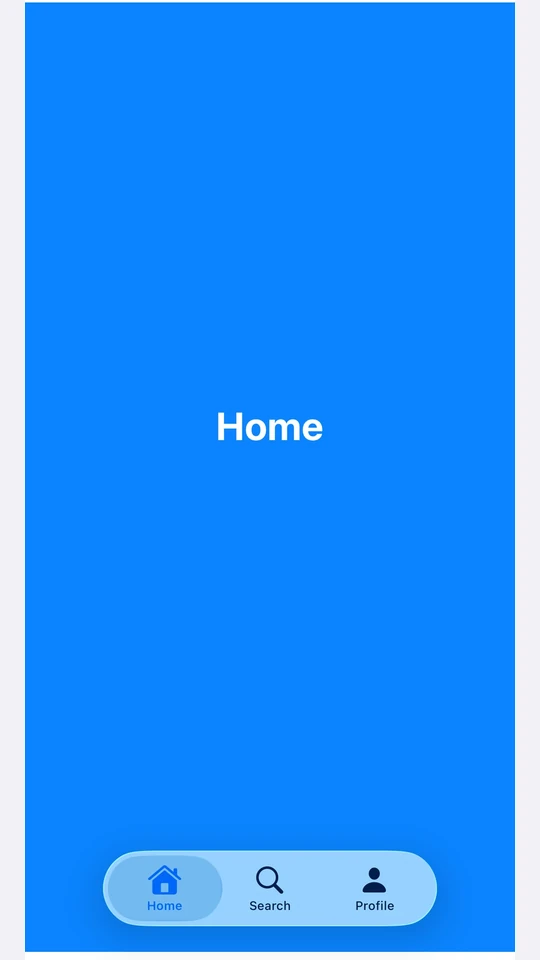
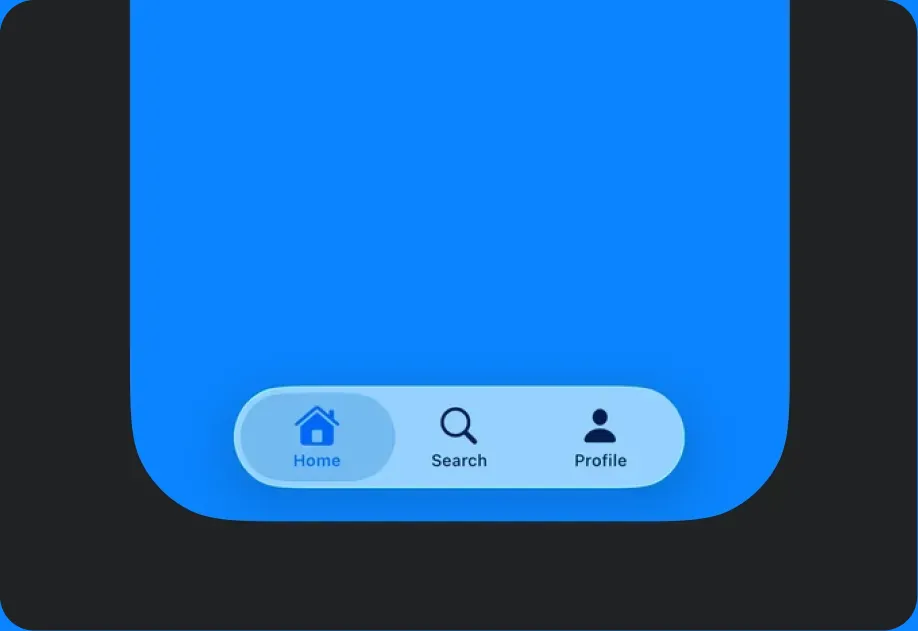
A TabView with a bottom tab bar showing Home, Search, and Profile tabs in iOS 26 Liquid Glass style

Note: For routed bottom-tab navigation across full-screen routes, use expo-router/unstable-native-tabs` instead.

Installation

Terminal
npx expo install @expo/ui

If you are installing this in an existing React Native app, make sure to install expo in your project.

Usage

Each page is a <TabView.Tab> child, identified by a value prop. TabView does not impose its own height — give it a frame, or place it inside a parent that does.

Page style (swipeable pager)

Use tabViewStyle({ type: 'page' }) for a horizontal pager with optional dot indicators. Pass defaultSelection to start the pager on a specific page without controlling it from React.

PagerExample.tsx
import { Host, Spacer, TabView, Text, VStack } from '@expo/ui/swift-ui'; import { background, font, foregroundStyle, frame, tabViewStyle, } from '@expo/ui/swift-ui/modifiers'; const fillFrame = frame({ maxWidth: Infinity, maxHeight: Infinity }); const pageFrame = frame({ minHeight: 320, maxHeight: 320 }); export default function PagerExample() { return ( <Host style={{ flex: 1 }}> <TabView defaultSelection="1" modifiers={[pageFrame, tabViewStyle({ type: 'page' })]}> <TabView.Tab value="0"> <Page label="Page 1" color="#6200EE" /> </TabView.Tab> <TabView.Tab value="1"> <Page label="Page 2" color="#03DAC5" /> </TabView.Tab> <TabView.Tab value="2"> <Page label="Page 3" color="#FF5722" /> </TabView.Tab> </TabView> </Host> ); } function Page({ label, color }: { label: string; color: string }) { return ( <VStack alignment="center" modifiers={[fillFrame, background(color)]}> <Spacer /> <Text modifiers={[font({ size: 28, weight: 'bold' }), foregroundStyle('#FFFFFF')]}> {label} </Text> <Spacer /> </VStack> ); }

Controlled selection

Pass selection and onSelectionChange to drive the active tab from React state. Each <TabView.Tab>'s value is matched against selection. Add the animation modifier to animate transitions when selection changes from JS.

ControlledTabViewExample.tsx
import { useState } from 'react'; import { Button, Host, Spacer, TabView, Text, VStack } from '@expo/ui/swift-ui'; import { animation, Animation, background, font, foregroundStyle, frame, tabViewStyle, } from '@expo/ui/swift-ui/modifiers'; const fillFrame = frame({ maxWidth: Infinity, maxHeight: Infinity }); const pageFrame = frame({ minHeight: 320, maxHeight: 320 }); export default function ControlledTabViewExample() { const [selected, setSelected] = useState('0'); return ( <Host style={{ flex: 1 }}> <VStack> <Text>Selected: {selected}</Text> <Button label="Go to page 3" onPress={() => setSelected('2')} /> <TabView selection={selected} onSelectionChange={setSelected} modifiers={[ pageFrame, tabViewStyle({ type: 'page' }), animation(Animation.default, Number(selected)), ]}> <TabView.Tab value="0"> <Page label="Page 1" color="#6200EE" /> </TabView.Tab> <TabView.Tab value="1"> <Page label="Page 2" color="#03DAC5" /> </TabView.Tab> <TabView.Tab value="2"> <Page label="Page 3" color="#FF5722" /> </TabView.Tab> </TabView> </VStack> </Host> ); } function Page({ label, color }: { label: string; color: string }) { return ( <VStack alignment="center" modifiers={[fillFrame, background(color)]}> <Spacer /> <Text modifiers={[font({ size: 28, weight: 'bold' }), foregroundStyle('#FFFFFF')]}> {label} </Text> <Spacer /> </VStack> ); }

Page indicator dots

Use the indexViewStyle modifier together with tabViewStyle({ type: 'page' }) to control the dot indicators. Set indexDisplayMode to 'always', 'never', or 'automatic', and backgroundDisplayMode to render a translucent pill behind the dots.

PageIndicatorExample.tsx
import { Host, Spacer, TabView, Text, VStack } from '@expo/ui/swift-ui'; import { background, font, foregroundStyle, frame, indexViewStyle, tabViewStyle, } from '@expo/ui/swift-ui/modifiers'; const fillFrame = frame({ maxWidth: Infinity, maxHeight: Infinity }); const pageFrame = frame({ minHeight: 320, maxHeight: 320 }); export default function PageIndicatorExample() { return ( <Host style={{ flex: 1 }}> <TabView modifiers={[ pageFrame, tabViewStyle({ type: 'page', indexDisplayMode: 'always' }), indexViewStyle({ backgroundDisplayMode: 'always' }), ]}> <TabView.Tab value="0"> <Page label="Page 1" color="#4F8DF6" /> </TabView.Tab> <TabView.Tab value="1"> <Page label="Page 2" color="#34C759" /> </TabView.Tab> <TabView.Tab value="2"> <Page label="Page 3" color="#FF9F0A" /> </TabView.Tab> </TabView> </Host> ); } function Page({ label, color }: { label: string; color: string }) { return ( <VStack alignment="center" modifiers={[fillFrame, background(color)]}> <Spacer /> <Text modifiers={[font({ size: 28, weight: 'bold' }), foregroundStyle('#FFFFFF')]}> {label} </Text> <Spacer /> </VStack> ); }

Bottom tab bar

Use tabViewStyle({ type: 'automatic' }) for the SwiftUI default tab bar. Each tab's label and systemImage populate the bar item. Use the badge modifier on a tab to attach a badge to its bar item.

Note: For routed bottom-tab navigation across full-screen routes, use expo-router/unstable-native-tabs` instead.

BottomTabsExample.tsx
import { useState } from 'react'; import { Host, Spacer, TabView, Text, VStack } from '@expo/ui/swift-ui'; import { background, badge, font, foregroundStyle, frame, tabViewStyle, } from '@expo/ui/swift-ui/modifiers'; const fillFrame = frame({ maxWidth: Infinity, maxHeight: Infinity }); export default function BottomTabsExample() { const [selected, setSelected] = useState('inbox'); return ( <Host style={{ flex: 1 }}> <TabView selection={selected} onSelectionChange={setSelected} modifiers={[tabViewStyle({ type: 'automatic' })]}> <TabView.Tab value="inbox" label="Inbox" systemImage="tray.fill" modifiers={[badge('3')]}> <Page label="Inbox" color="#4F8DF6" /> </TabView.Tab> <TabView.Tab value="sent" label="Sent" systemImage="paperplane.fill"> <Page label="Sent" color="#34C759" /> </TabView.Tab> <TabView.Tab value="drafts" label="Drafts" systemImage="square.and.pencil"> <Page label="Drafts" color="#FF9F0A" /> </TabView.Tab> </TabView> </Host> ); } function Page({ label, color }: { label: string; color: string }) { return ( <VStack alignment="center" modifiers={[fillFrame, background(color)]}> <Spacer /> <Text modifiers={[font({ size: 28, weight: 'bold' }), foregroundStyle('#FFFFFF')]}> {label} </Text> <Spacer /> </VStack> ); }

API

import { TabView } from '@expo/ui/swift-ui';

Component

TabView

iOS

Type: React.Element<TabViewProps>

A SwiftUI TabView. Pair with modifiers to choose the appearance:

  • tabViewStyle({ type: 'page' }) — swipeable pager.
  • tabViewStyle({ type: 'automatic' }) — bottom tab bar.
  • tabViewStyle({ type: 'sidebarAdaptable' }) — sidebar on iPad, tab bar on iPhone.

Use <TabView.Tab> children to define pages. Each tab is identified by its value prop, which is used for selection.

For routed bottom-tab navigation across full-screen routes, prefer expo-router/unstable-native-tabs.

TabViewProps

children

iOS
Type: React.ReactNode

The tab's content — rendered when this tab is selected.

label

iOS
Optional • Type: string

Text label shown in the tab bar or sidebar.

systemImage

iOS
Optional • Type: SFSymbol

SF Symbol name shown alongside the label.

value

iOS
Type: string

Identifies this tab. Matched against the parent TabView's selection and defaultSelection props.

children

iOS
Literal type: union

<TabView.Tab> elements defining the pages.

Acceptable values are: React.ReactElement | React.ReactElement

defaultSelection

iOS
Optional • Type: string

The initially selected tab when the component is uncontrolled (no selection prop). Ignored if selection is provided.

onSelectionChange

iOS
Optional • Type: (selection: string) => void

Called when the selected tab changes.

selection

iOS
Optional • Type: string

The selected tab (controlled mode). Pair with onSelectionChange. Pass defaultSelection instead to let the native view manage state.